

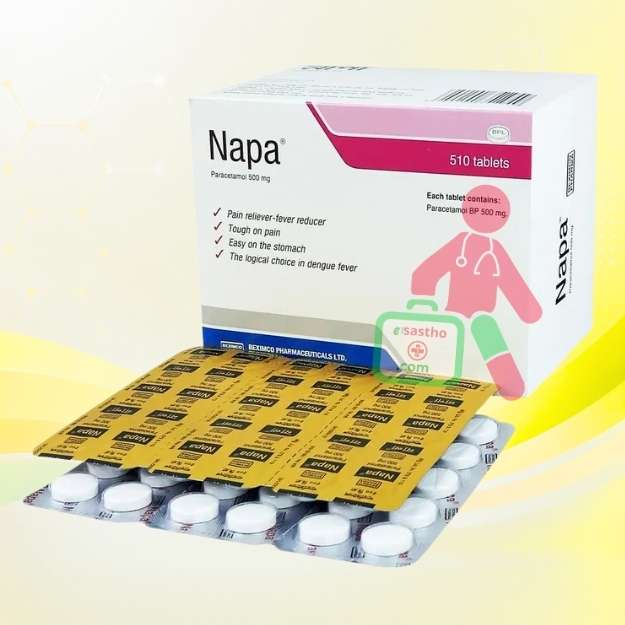
 Indication
Napa 500 mg may be used for the temporary relief of mild to moderate pain and reduction of fever, including:
- Headache
- Toothache
- Body ache
- Muscle pain
- Back pain
- Menstrual pain
- Pain associated with common cold and flu
- Other mild to moderate painful conditions
 Administration
Napa 500 mg may generally be taken with or without food.
Dose
Adult
The appropriate dose depends on the individual’s age, health condition and other medicines being taken.
For adults, the usual Paracetamol dose is 500 mg to 1,000 mg per dose, with doses separated by an appropriate interval. The total daily dose should not exceed the recommended maximum.
Always follow the dose recommended on the product label or by your doctor/pharmacist.
Children
The dose of Paracetamol in children should generally be determined according to body weight and age.
Children should not be given Napa 500 mg tablets unless the dose and formulation are appropriate for them and recommended by a healthcare professional.
For young children, an appropriate Paracetamol syrup or suspension may be preferred because the dose can be adjusted according to body weight.
 Contraindication
Napa 500 mg should not be used in individuals who have:
- A known allergy or hypersensitivity to Paracetamol or any component of the medicine.
- Severe liver disease, unless specifically advised by a healthcare professional.
 Mode of Action
Paracetamol produces analgesic and antipyretic effects. It reduces pain mainly through its action on the central nervous system and reduces fever by acting on the body’s temperature-regulating mechanisms in the brain.
Unlike many non-steroidal anti-inflammatory drugs (NSAIDs), Paracetamol has relatively weak anti-inflammatory activity at therapeutic doses.
 Precautions
Use Napa 500 mg with caution and seek medical advice if you have:
- Liver disease
- Kidney impairment
- Chronic alcohol use
- Severe malnutrition
- Dehydration or significant fluid loss
- A history of allergy to Paracetamol
- Long-term use of Paracetamol
Do not exceed the recommended dose. An overdose of Paracetamol can cause severe and potentially life-threatening liver damage, even if the person initially feels well.
If an overdose is suspected, seek emergency medical attention immediately.
 Monitoring
For patients who require prolonged treatment or those at increased risk of toxicity, a healthcare professional may recommend appropriate monitoring, particularly of liver function.
In suspected overdose, blood Paracetamol levels and liver-related investigations may be required.
 Drug Interactions
Paracetamol may interact with certain medicines. Important examples include:
- Warfarin and other anticoagulants: Regular long-term use of Paracetamol may increase the anticoagulant effect in some patients.
- Metoclopramide: May increase the rate of absorption of Paracetamol.
- Domperidone: May increase the rate of absorption of Paracetamol.
- Cholestyramine: May reduce the absorption of Paracetamol if taken too close together.
- Enzyme-inducing medicines, including some anticonvulsants, may affect Paracetamol metabolism and may increase the risk of liver toxicity, particularly with prolonged or excessive use.
- Probenecid: May affect Paracetamol metabolism and clearance.
Always inform your doctor or pharmacist about all prescription medicines, over-the-counter medicines and supplements you are taking.
 Important Safety Information
Do not exceed the recommended dose of Napa 500 mg. Taking too much Paracetamol can cause serious liver damage.
Do not combine Napa 500 mg with another medicine containing Paracetamol unless specifically advised by a healthcare professional.
If you accidentally take more than the recommended amount, seek medical attention immediately, even if you feel well.
You must be logged in to post a review.



Reviews
There are no reviews yet.